PlatePODZ systems

Flexo Plate Storage, Built Around the Plate Library

Every plate set should have one shelf position the crew can find without digging — flat in its box, protected, and back in the same place after the run. PlatePODZ organizes flat plate boxes on adjustable shelving, and that shelving can ride on mobile carriages so one working aisle serves the whole plate library. The layout starts with your box sizes and set count — not a standard rack.

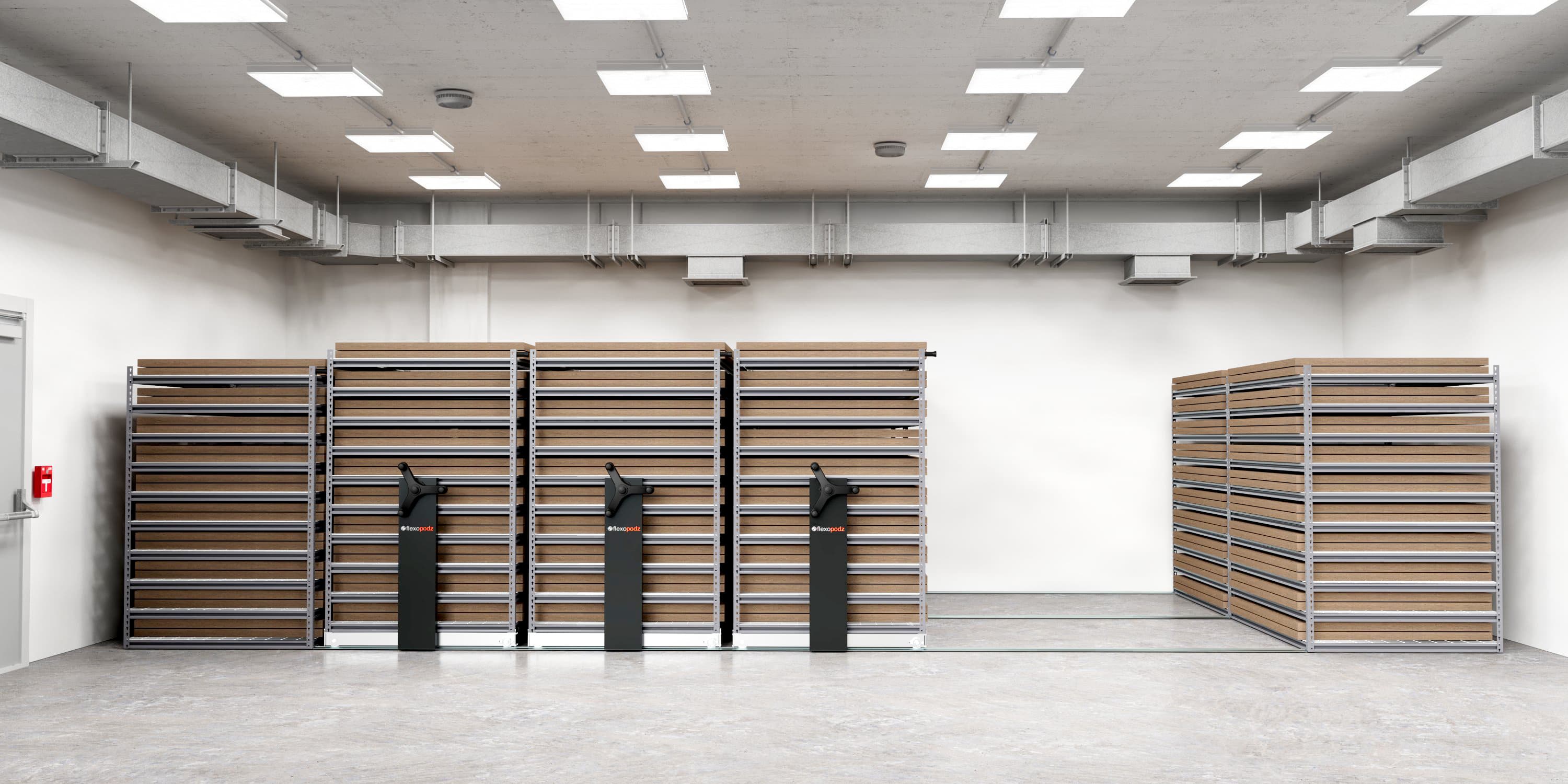
Mobile PlatePODZ system with flat plate boxes organized on adjustable shelves

Plate position

Protected in flat boxes

Shelf format

Adjustable for mixed sizes

Carriage movement

Mechanical assist

Aisle plan

One open aisle at a time

Storage condition

Why plate boxes belong on defined shelves

For plates, vertical storage does not mean standing plate material on edge. The plate sets stay flat inside their boxes. The vertical gain comes from using the room height with organized shelf levels instead of building deeper floor piles or spreading boxes across every available table and rack.

Uncontrolled stacking makes the lower boxes carry the load of everything above them and makes the needed set harder to reach. Floor storage near presses adds traffic, contamination, and repeated handling. A defined shelf position keeps the plate box supported and lets the crew retrieve one set without reorganizing the pile around it.

System mechanics

How the mobile shelving works

01

Fixed shelving assigns a permanent aisle to each row. Mobile PlatePODZ carriages stay together on a low-profile floor rail and open one working aisle at the point of retrieval. By sharing one aisle instead of reserving one at every row, the layout can reduce the floor area the plate library takes — or organize a larger library in the same area. The builder shows what that means for the plant's actual boxes and room.

02

The shelf arrangement starts with the largest plate box and the mix of box sizes below it. Adjustable shelving supports different widths and heights without forcing every position to the largest dimension. The layout keeps each box in a defined location and preserves clear access to the face of the shelf.

03

Mechanical-assist handles move the loaded carriage. Once the needed aisle is open, the locking system holds that working space while the box is retrieved or returned. Static PlatePODZ can use the same flat-box organization when mobile density is not needed or when the plant wants a phased starting point.

Start with the inventory

Size the system from the plate library

The right system count depends on the largest plate dimensions, plate-box construction, number of sets, stacking rules, shelf opening, and usable room height. Current boxes should be measured rather than estimated because a small change in box size can change how many positions fit on a shelf.

The plate storage builder compares box fit, shelf count, stack height, and room layout. It gives the team a directional plan before final field measurements and engineering.

Build a layout from your plate inventory

Defensible planning

The Operational Capacity Evaluation

If plate storage is the known problem, start with the builder. If the plant also needs to document retrieval paths, handling, and the cost of the current setup, the onsite Operational Capacity Evaluation measures the current plate room with source-tagged findings finance can trace — and builds the case for the capital request.

Review the onsite Operational Capacity Evaluation

Buyer questions

Questions plant teams ask before approving a layout

What plate box sizes can PlatePODZ hold?

The shelf plan is built from the plant’s actual box dimensions, starting with the largest box and then grouping the remaining sizes. There is no honest universal box count because shelf fit changes with box width, height, depth, and the clearance needed for retrieval.

Are plates stored flat or hanging?

PlatePODZ stores plate sets flat inside their boxes. The shelving uses room height to organize more positions, but the plate material is not stood on edge or hung from a support.

Can PlatePODZ and SleevePODZ share a layout?

Yes. Plate and sleeve storage can be planned together so the working aisle, retrieval paths, and handoff to mounting make sense as one plate room. Each product keeps the support geometry required for its own inventory.

What floor conditions does mobile PlatePODZ require?

The floor rail has a 1/2-inch profile and is ADA compliant. It requires a stable, level, load-bearing floor with an approved anchoring plan. Floor joints, drains, slopes, coatings, and utilities are checked during field review before the final rail position is released.

How is a plate storage system installed?

After the inventory and layout are approved, the installation team verifies the floor, sets and anchors the floor rail where mobile carriages are used, assembles the shelving, adjusts the shelf openings, and checks carriage movement and aisle locking before turnover.

Start with the current setup

Show us the inventory, the room, and the retrieval problem.

Cookies

Flexopodz uses website activity to improve builders and follow up on submitted project interest.

Privacy details
Cookie settings

Keep only the basics needed for the website to work. Website insight tracking will stay off for this browser.