Anilox sleeve systems

Anilox Sleeve Storage, Built for Controlled Handling

An anilox sleeve is a precision asset, and it should never be waiting in a pile or leaning near a press. Anilox sleeve storage should give each sleeve a vertical, separated position with a defined path from storage through cleaning to press-side handoff. Flexopodz configures the system around the actual anilox inventory — carriage rows for the stored population, a mobile cart for the working group, or both.

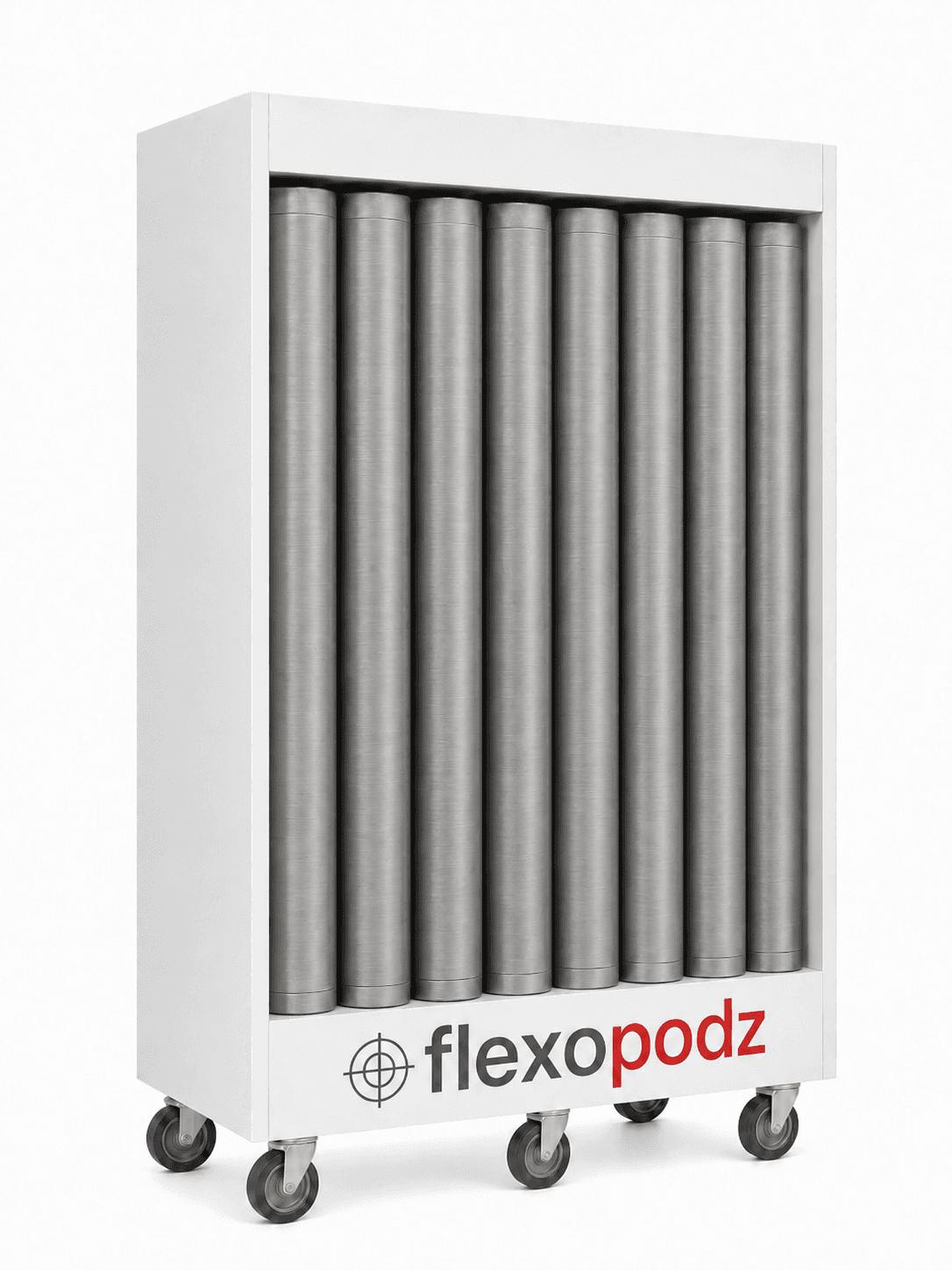
Flexopodz vertical mobile cart configured with separated positions for anilox sleeves

Orientation

Vertical and separated

Layout basis

Actual sleeve inventory

Access

Defined retrieval positions

System options

Mobile cart or carriage plan

Storage condition

Why anilox sleeves belong vertical and separated

Horizontal storage puts the sleeve load through a limited part of the cylinder. Over time, that condition can contribute to ovalization. For a precision sleeve, loss of roundness is not a cosmetic problem. It shows up when the crew needs the asset to mount and run as intended.

Floor storage near presses creates repeated handling and exposes the sleeve to normal plant traffic. Temporary staging also makes location control harder because the storage position changes from shift to shift. Vertical, separated positions keep the sleeve supported and give the return process a clear destination.

System mechanics

How the storage system works

01

The system is configured around sleeve dimensions, weight, retrieval frequency, and the path between storage, cleaning, and press. Track-mounted holders can secure sleeves from the top in a carriage system, while a vertical mobile cart can keep a working group separated for near-press use.

02

Where a carriage-and-rail layout is appropriate, the mobile rows remove permanent aisles. One working aisle opens where the operator needs it. By sharing one aisle instead of reserving one at every row, the layout can reduce the floor area assigned to storage — or hold more organized positions in the same area.

03

Two-level carriage arrangements use available room height. Mechanical-assist handles move the carriage on a low-profile floor rail — a 1/2-inch profile that is ADA compliant — and the locking system holds the open aisle during retrieval. The holder pattern is adjusted for mixed sleeve dimensions instead of assuming every position is interchangeable.

Start with the inventory

Size the system from the anilox inventory

Start with a verified inventory. Record each sleeve’s outside diameter, face width, overall length, weight where handling changes, and normal press assignment. Separate long-term storage from the smaller working group that moves frequently between cleaning and production.

The sleeve storage builder is a useful directional tool for carriage count and room fit. Anilox sleeve holder geometry still requires a specific review before the layout is released because the storage interface must match the asset.

Build a starting layout from your sleeve inventory

Defensible planning

The Operational Capacity Evaluation

If anilox storage is the known problem, start with the builder. If the plant also needs to document staging, handling exposure, and the cost of the current setup, the onsite Operational Capacity Evaluation measures the current conditions with source-tagged findings finance can trace — and builds the case for the capital request.

Review the onsite Operational Capacity Evaluation

Buyer questions

Questions plant teams ask before approving a layout

How many anilox sleeves fit in a section?

Capacity depends on sleeve diameter, length, weight, holder spacing, and whether the layout uses one or two levels. The count is produced from the actual inventory. A generic section count would ignore the dimensions that determine safe separation and access.

Can the system hold bridge sleeves or other cylindrical assets?

It can be reviewed for bridge sleeves, cylinders, and other round assets, but each asset needs its own dimensions, weight, support points, and handling path checked. A holder is not assumed to fit a different asset without that review.

Does the storage system replace cleaning procedures?

No. The system provides a defined storage and retrieval position. Cleaning, inspection, drying, and release for storage remain part of the plant’s operating procedure before an anilox sleeve is returned.

What floor conditions does a carriage system need?

The floor rail has a 1/2-inch profile and is ADA compliant. A carriage layout needs a stable, level, load-bearing floor and a clear anchoring plan. The field review checks joints, drains, coatings, slopes, utilities, and the travel path before final placement.

How is anilox sleeve storage installed?

The inventory and holder pattern are approved first. For a carriage system, the floor rail is then set and anchored, carriages and holders are assembled, movement and aisle locking are checked, and the retrieval and return sequence is reviewed with the plant team.

Start with the current setup

Show us the inventory, the room, and the retrieval problem.

Cookies

Flexopodz uses website activity to improve builders and follow up on submitted project interest.

Privacy details
Cookie settings

Keep only the basics needed for the website to work. Website insight tracking will stay off for this browser.